We build computational tools for the people who design tomorrow's batteries.
MaterSynq was founded in Pittsburgh in 2025 by computational materials scientists who spent years watching promising cathode candidates fail in synthesis because no one caught the instabilities earlier — computationally.
Compress the materials discovery cycle — without compromising scientific rigor.
The standard path from a new cathode composition to "worth synthesizing" is 6–18 months of iterative wet-lab work. The majority of that time is eliminated if you can pre-screen candidates computationally at DFT accuracy before touching a furnace.
That's not a new idea. The bottleneck has always been compute cost and method expertise — DFT is expensive, and setting up production-quality calculations correctly requires specialized knowledge most battery labs don't have in-house.
MaterSynq exists to close that gap. We run the physics correctly, we run it at scale, and we hand you a synthesis-ready candidate list that your team can act on directly.
What MaterSynq is not: We are not a wet laboratory and do not synthesize materials. We do not manufacture battery cells or packs. Computational predictions from our platform require experimental validation before conclusions about real-world battery performance can be drawn. Our outputs — formation energies, phonon stability flags, surface energies, ranked candidate tables — are pre-synthesis screening data, not specifications for production materials.
Accuracy over speed
MLIP pre-screens accelerate the pipeline, but every result is anchored to DFT reference quality. We don't sacrifice physics for throughput.
Transparent uncertainty
Every output includes error estimates and scope notes — we're explicit about what the models can and can't predict, and where our validation data ends.
Scientific partnership
We onboard each client through a research brief call. We're not a form-fill API — we work with your specific chemistry and deliver results your team can interpret.
The team
Founded by computational chemists and materials scientists. We've run DFT workflows, trained MLIP models, and published in the literature on the same methods we deploy here.
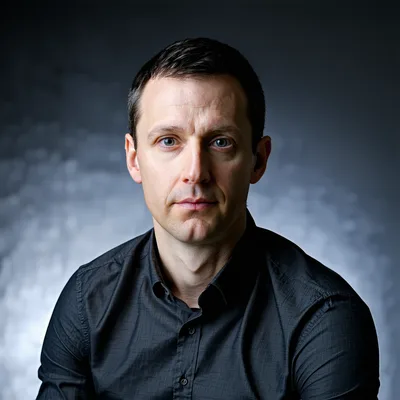
Andrei Volkov
CEO & Co-founder
PhD in Computational Materials Science from Carnegie Mellon. Previously postdoctoral researcher at Argonne National Laboratory, with a focus on MLIP development for battery cathode oxides. Fluent in VASP, phonopy, and equivariant neural potential architectures.
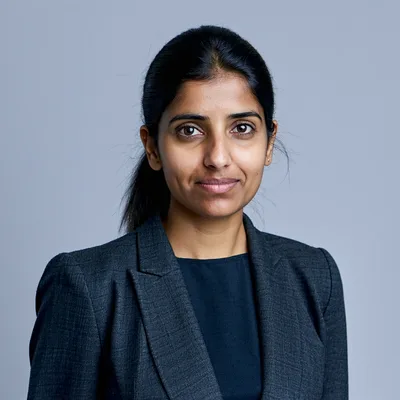
Priya Menon
Head of Computational Science
PhD in Physical Chemistry, University of Pittsburgh. Research expertise in DFT+U methods for transition metal oxides and phonon-driven phase transitions. Designed the phonon screening pipeline deployed across all MaterSynq campaigns.

Marcus Osei
Head of Platform Engineering
MS in Computer Science, Carnegie Mellon. Previously HPC infrastructure engineer at Pittsburgh Supercomputing Center. Architected the distributed workflow engine that coordinates prototype enumeration, MLIP inference, and DFT jobs across heterogeneous compute clusters.
Built in Pittsburgh. Close to where the materials science happens.
Pittsburgh is home to Carnegie Mellon, the University of Pittsburgh, and NETL — three of the leading computational materials and energy research institutions in the United States. We're embedded in that research community, which means we can collaborate with domain experts on new chemistry extensions before productizing them.
- 4721 Forbes Avenue, Suite 200, Pittsburgh, PA 15213
- Adjacent to Carnegie Mellon University research corridor
- [email protected]

Interested in what we're building?
Whether you're looking to run a campaign, explore a research collaboration, or just want to talk about the science — reach out.